

Paragon Medical precision medical device manufacturing facility
Industry Insights & Articles

Medical Device CDMO Blog & Insights

Expert articles, technical insights, and innovations in precision medical device manufacturing.

Latest Medical Device Manufacturing Articles

0%

Choosing the right Orthopedic Implants requires more than comparing prices or product photographs. Global buyers must evaluate clinical purpose, material quality, manufacturing consistency, and supplier reliability. A hip replacement component faces different demands from a spinal cage or trauma plate. Each device must match the patient’s anatomy, surgical technique, and expected load.

This guide examines ten important types of Orthopedic Implants used across hospitals, clinics, and specialized surgical centers. It considers joint replacement systems, fixation plates, intramedullary nails, spinal implants, bone screws, and other commonly purchased devices. Buyers will find practical details about typical applications, material choices, design features, and procurement questions. Small details matter. Thread shape, surface finish, packaging, and instrument compatibility can affect surgical efficiency.

Regulatory documentation also deserves careful attention. Certificates, traceability records, sterilization information, and quality-management evidence should be reviewed before purchasing. Requirements vary between countries, so one supplier’s documentation may not satisfy every market. That point is easy to overlook.

No buying guide is flawless. Product performance depends on surgical judgment, patient factors, and correct implantation. Laboratory results cannot replace clinical evaluation. A lower unit price may also create higher costs through training, revisions, or delayed delivery. Experienced buyers therefore assess the complete supply chain, not only the catalog page.

The following overview is designed to support informed conversations with qualified surgeons, engineers, distributors, and regulatory professionals. It does not replace clinical advice. Used carefully, it can help global buyers compare options with greater confidence and fewer avoidable surprises.
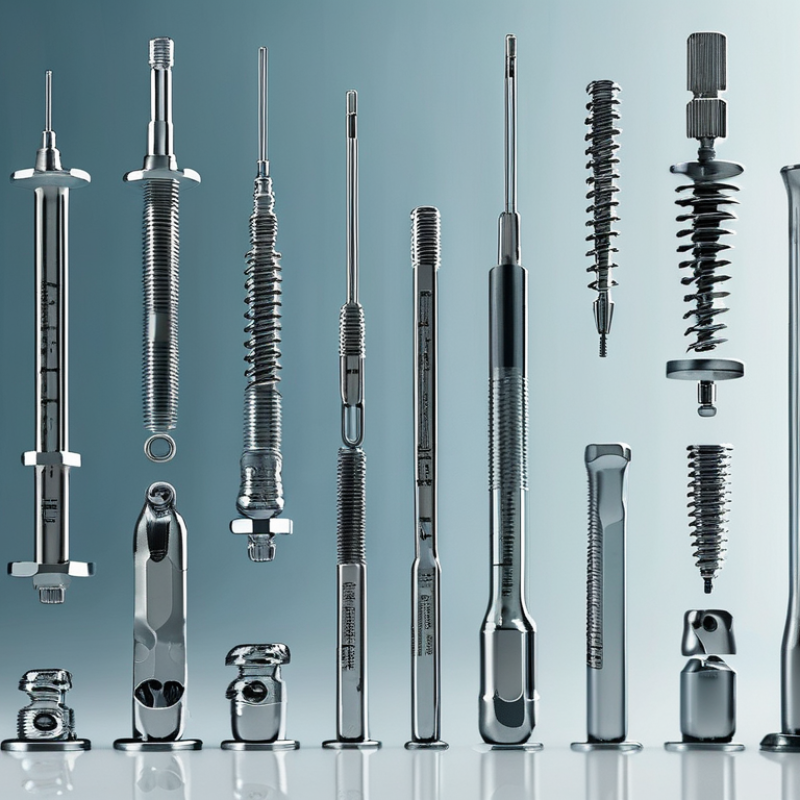
Top 10 Types of Orthopedic Implants for Global Buyers

Orthopedic Implant Fundamentals: Functions, Materials, and Applications

Orthopedic implants are not interchangeable hardware. Their function depends on anatomy, loading, surgical technique, and healing conditions. The main types include fixation plates, screws, intramedullary nails, wires, joint replacements, spinal cages, anchors, and bone substitutes. Plates stabilize fractures along the bone surface. Nails support long-bone fractures from within the canal. Joint replacements restore movement in damaged hips, knees, or shoulders. Spinal cages help maintain disc height and encourage fusion. Small geometry differences can affect fit, stress distribution, and revision risk.

Material selection influences strength, weight, corrosion resistance, imaging, and tissue response. Titanium alloys offer useful strength with relatively low weight. Cobalt-chromium alloys provide strong wear resistance for selected joint components. Stainless steel remains common in certain fixation applications. PEEK can support radiographic visibility in spinal procedures, while ceramics and polyethylene serve specific joint functions. No material is perfect. A smooth surface may reduce wear, yet fixation can become more difficult in another application. Clinical evidence, validated testing, traceability, sterilization data, and clear instructions for use support reliable purchasing. Local regulatory requirements also matter.

Tips: Compare the implant with its intended anatomy, load, and surgical approach. Request material certificates, mechanical-test results, packaging details, and shelf-life records. Check whether instruments are compatible and easy to sterilize. Do not judge quality by appearance alone. A polished finish can look impressive but reveal little about long-term performance. Procurement teams should also review surgeon feedback, imaging requirements, and revision data. Even careful selection has uncertainty; real-world outcomes may differ from laboratory expectations.

Top 10 Types of Orthopedic Implants for Global Buyers

This chart compares the approximate density of representative materials commonly used in ten orthopedic implant categories. Material selection depends on mechanical strength, biocompatibility, wear resistance, imaging compatibility, and the intended anatomical application.

Joint Replacement Implants for Hip, Knee, Shoulder, and Ankle Care

Joint replacement implants are designed to restore movement when damaged surfaces cause persistent pain. Hip systems commonly use a ball-and-socket structure, while knee implants recreate load-bearing surfaces and guided motion. Shoulder replacements may replace the humeral head, the socket, or both. Ankle implants aim to preserve motion during walking, but their design demands careful alignment. Each anatomical site presents different forces, bone quality, and rehabilitation needs.

For global buyers, implant selection should begin with clinical indications, not price alone. Review material composition, fixation method, size range, sterilization records, and traceability documents. Surgeons may consider cemented or cementless fixation for hip and knee procedures, depending on bone condition and patient factors. Shoulder cases require attention to tendon function. Ankle cases require accurate imaging and alignment planning. These details affect inventory and patient outcomes.

Reliable purchasing also depends on verified manufacturing controls, regulatory documentation, and post-market surveillance data. Ask for evidence from clinical use, not attractive promises. In practice, surgical technique can influence results as much as implant design. That is easy to underestimate. No implant suits every patient, and published evidence may not cover every population or activity level. Buyers should involve orthopedic specialists, procurement teams, and local compliance experts before approving a system. Small gaps matter.

Bone Fixation Implants: Plates, Screws, Nails, and External Fixators

Bone fixation implants support fractured bones while healing restores strength. The Lancet’s Global Burden of Disease study reported 178 million new fractures worldwide in 2019. WHO also estimates that 1.71 billion people live with musculoskeletal conditions. Demand is broad, but implant selection remains highly patient-specific.

Plates provide stable support near joints and along irregular bone surfaces. Screws secure fragments, compress gaps, or anchor plates. Intramedullary nails sit inside long bones, sharing load through the limb’s central axis. External fixators use pins and connecting frames outside the body. They can help with severe swelling, open injuries, or staged treatment.

Material choice, thread design, locking options, and imaging compatibility affect performance. Yet implant strength alone does not guarantee healing. Surgical technique, blood supply, infection control, and patient compliance matter just as much. This is where many purchasing assumptions fail.

Tips: Global buyers should request fatigue data, sterilization validation, biocompatibility evidence, and traceability records. Compare the complete system, not one low-priced component. Ask for clinical-use feedback from qualified trauma surgeons. Regulatory pathways differ by market, and documentation gaps can delay hospital approval. ISO 10993 testing supports biological safety assessment, but it cannot replace clinical judgment. Some product specifications look impressive on paper. Real-world handling may tell a different story.

Spinal, Dental, and Maxillofacial Implants for Structural Restoration

Top 10 Types of Orthopedic Implants for Global Buyers

Spinal implants support structural restoration when damaged vertebrae, discs, or spinal segments reduce stability. Common options include interbody cages, pedicle screws, rods, plates, and artificial discs. Interbody devices help maintain disc height and may encourage bone fusion. Screw-and-rod systems control movement across unstable levels. Material choice matters, especially when imaging clarity and long-term strength are priorities. Titanium alloys are widely considered, while radiolucent polymers can improve postoperative imaging. Fit is never universal. Patient anatomy often challenges standard sizing.

Dental implants replace missing tooth roots and support crowns, bridges, or removable prostheses. A typical system includes an implant fixture, abutment, and visible restoration. Buyers should examine thread design, surface treatment, connection precision, and fatigue resistance. Surgical planning may require three-dimensional imaging and bone-density assessment. Small errors can affect insertion stability, soft-tissue health, and final appearance. Healing also varies more than product tables suggest.

Maxillofacial implants restore facial contours, orbital walls, jaws, and other complex structures after trauma or disease. Plates, meshes, screws, patient-specific components, and bone fixation systems serve different reconstruction needs. Thin plates can reduce prominence beneath delicate facial tissue, while stronger fixation may suit load-bearing jaw regions. Accurate contouring is essential around the eye and nasal cavity. Global buyers should verify sterilization controls, traceability, clinical documentation, and local regulatory clearance. Cost alone can hide weaknesses in training, imaging compatibility, or technical support. Even well-designed implants need careful planning and skilled handling.

Global Buyer Criteria: Safety, Certification, Customization, and Supply Chains

Top 10 Types of Orthopedic Implants for Global Buyers

Global buyers often source joint replacements, trauma plates, bone screws, intramedullary nails, spinal cages, rods, and fixation systems. They may also evaluate suture anchors, external fixation devices, bone graft substitutes, and custom implants. Each product requires evidence beyond a polished catalogue. Safety depends on material quality, mechanical testing, biocompatibility, sterilization validation, and clear instructions for use. Buyers should review clinical evidence, complaint histories, and batch traceability before approving a supplier.

Certification must match the destination market. Check quality systems, risk management records, biological evaluation, and product-specific testing. A valid certificate alone does not prove consistent performance. Ask for audit reports, declarations, inspection records, and shelf-life data. Customization can improve surgical fit, but it may increase design risks, approval time, and minimum order quantities. Technical drawings, digital files, sample approvals, and change-control procedures need written protection. Small details matter.

Tips: Request production samples and inspect packaging seals. Confirm lot numbers, implant dimensions, sterilization status, and delivery terms. Test communication before signing a large contract. Supply chains need backup plans, realistic lead times, and temperature-appropriate storage. A low price may look efficient, yet weak traceability can create expensive delays. No checklist is perfect. Buyers should revisit supplier performance after every shipment and question assumptions that once seemed reliable.

Top 10 Types of Orthopedic Implants for Global Buyers Global Buyer Criteria: Safety, Certification, Customization, and Supply Chains
No. Implant Type Typical Clinical Use Common Materials Key Safety and Performance Requirements Typical Regulatory and Quality Evidence Customization Options Supply-Chain Priorities for Global Buyers
1 Total Hip Replacement Systems Replacement of damaged hip joint surfaces in advanced osteoarthritis, fracture, or other severe joint disease. Titanium alloys Cobalt-chromium alloys Ceramics UHMWPE Secure fixation, wear resistance, fatigue strength, corrosion resistance, dimensional compatibility, and controlled particulate generation. Biocompatibility evaluation under ISO 10993; material and mechanical testing commonly linked to ISO 5832 and applicable ASTM methods; quality systems commonly aligned with ISO 13485. Stem length and offset, femoral head size, acetabular shell size, bearing couple, porous or textured fixation surfaces, and instrument configuration. Lot traceability, sterile barrier validation, component compatibility, instrument availability, inventory planning, and post-market surveillance support.
2 Total and Partial Knee Replacement Systems Replacement of worn or severely damaged knee joint surfaces while preserving or reconstructing appropriate bone and ligament structures. Cobalt-chromium alloys Titanium alloys UHMWPE Resistance to wear and fatigue, accurate alignment, stable fixation, low-friction articulation, and validated sterilization compatibility. Biological safety assessment under ISO 10993; mechanical and material characterization using applicable international standards; manufacturer quality management commonly demonstrated through ISO 13485 certification. Femoral and tibial sizes, polyethylene insert thickness, posterior-stabilized or cruciate-retaining configuration, alignment instruments, and fixation method. A complete size matrix, synchronized component availability, sterile packaging controls, instrument-set logistics, and clear compatibility documentation.
3 Spinal Interbody Fusion Cages Support of spinal fusion by restoring disc-space height and providing a space for bone graft material. PEEK Titanium alloys Tantalum in selected designs Structural strength, subsidence resistance, radiographic visibility, appropriate surface characteristics, dimensional accuracy, and compatibility with the intended surgical approach. Biocompatibility and chemical characterization under ISO 10993; mechanical testing for spinal devices using applicable ASTM or ISO methods; risk management commonly structured under ISO 14971. Height, footprint, lordotic angle, approach-specific geometry, graft windows, radiopaque markers, and porous or textured surfaces. Accurate size labeling, traceability of raw materials, validated cleaning and packaging, surgeon-specific instrument sets, and controlled design changes.
4 Spinal Pedicle Screw and Rod Systems Stabilization and alignment of the spine in fusion, deformity correction, trauma, and selected degenerative conditions. Titanium alloys Cobalt-chromium alloys PEEK components Resistance to pull-out, bending, fatigue, and loosening; secure locking interfaces; accurate instrumentation; and compatibility across system components. Biocompatibility evaluation under ISO 10993; mechanical testing of spinal fixation components using applicable standards; ISO 13485-based quality controls and ISO 14971 risk management are commonly expected. Screw diameter and length, fixed or polyaxial heads, rod diameter and contour, reduction features, hooks, connectors, and minimally invasive instruments. System interoperability, complete component availability, instrument-set tracking, sterile processing instructions, and strong lot-level documentation.
5 Trauma Plates Internal fixation of fractures and osteotomies in long bones, periarticular regions, the clavicle, pelvis, and other anatomical areas. Titanium alloys Stainless steel Cobalt-chromium alloys Appropriate strength and stiffness, fatigue resistance, anatomical fit, screw-hole integrity, controlled surface finish, and reduced risk of soft-tissue irritation. Material specifications commonly referenced through ISO 5832 or equivalent standards; biocompatibility under ISO 10993; mechanical testing, sterilization validation, and quality management documentation. Plate length, hole count and pattern, left/right anatomy, contour, locking or compression holes, thickness, and minimally invasive plate profiles. Broad size coverage, consistent plate and screw compatibility, corrosion control, packaging robustness, barcode or UDI support, and regional stock planning.
6 Intramedullary Nails Internal fixation of long-bone shaft and selected metaphyseal fractures, especially in the femur, tibia, and humerus. Titanium alloys Stainless steel Fatigue strength, bending and torsional resistance, accurate locking, controlled nail curvature, end-cap security, and compatibility with insertion instruments. Material and mechanical performance testing under applicable implant standards; biocompatibility evaluation under ISO 10993; manufacturing controls commonly supported by ISO 13485 certification. Nail diameter and length, curvature, locking-hole configuration, entry-point geometry, end caps, and targeting guides. Reliable availability of multiple lengths and diameters, instrument-set completeness, radiographic marker consistency, sterilization status, and fracture-specific inventory forecasting.
7 Bone Screws and Cannulated Screws Standalone or adjunct fixation of fractures, osteotomies, small bone injuries, and ligament or tendon-related bone fixation procedures. Titanium alloys Stainless steel Bioabsorbable polymers in selected applications Thread integrity, insertion torque, pull-out resistance, fatigue performance, driver compatibility, accurate dimensions, and controlled surface finish. Biocompatibility assessment under ISO 10993; material requirements commonly supported by ISO 5832 or equivalent specifications; mechanical verification and validated cleaning or sterilization processes. Diameter, length, thread pitch, head style, cannulation, self-tapping features, variable-angle options, and sterile or non-sterile supply. High SKU accuracy, standardized drivers, corrosion-resistant packaging, clear thread and diameter labeling, lot traceability, and replenishment availability.
8 External Fixation Systems Temporary or staged stabilization of complex fractures, open injuries, bone length discrepancies, and soft-tissue-compromised cases. Stainless steel Titanium alloys Carbon-fiber composite rods Frame rigidity, pin or wire stability, corrosion resistance, safe adjustment, compatibility among clamps and rods, and appropriate instructions for pin-site care. Biocompatibility evaluation for patient-contacting components; mechanical testing of frames and fixation elements; ISO 13485 quality controls and ISO 14971 risk management are commonly used. Rod length, clamp geometry, pin and wire diameter, modular frame layout, radiolucent components, and patient-specific frame planning. Modular interchangeability, rapid availability of replacement components, reusable-instrument reprocessing instructions, durable packaging, and field-service support.
9 Shoulder Arthroplasty Systems Replacement or reconstruction of the shoulder joint in degenerative disease, fracture, cuff-tear arthropathy, and selected revision cases. Titanium alloys Cobalt-chromium alloys Ceramics UHMWPE Joint stability, range of motion, fixation security, wear resistance, anatomical restoration, and reliable assembly of modular components. Biocompatibility evaluation under ISO 10993; material and mechanical testing using applicable international standards; documented design controls, risk management, sterilization validation, and ISO 13485 quality systems. Humeral stem size, head diameter and offset, glenoid component size, anatomic or reverse configuration, lateralization, and instrument options. Complete modular compatibility, accurate sizing instruments, implant-to-instrument traceability, sterile packaging validation, and surgeon training documentation.
10 Suture Anchors and Soft-Tissue Fixation Devices Reattachment of tendons, ligaments, and other soft tissues to bone in shoulder, knee, foot, ankle, and elbow procedures. Titanium alloys PEEK Bioabsorbable polymers High-strength sutures Pull-out strength, knot or knotless fixation security, controlled deployment, tissue compatibility, degradation profile where applicable, and reliable suture performance. Biological evaluation under ISO 10993; mechanical pull-out and cyclic testing using applicable methods; sterilization validation, packaging validation, risk management, and quality-system documentation. Anchor diameter, insertion style, eyelet configuration, number and type of sutures, knotless or knotted design, and absorbable or non-absorbable material selection. Sterile barrier integrity, suture and anchor lot traceability, compatibility with insertion tools, shelf-life evidence, clear deployment instructions, and stable replenishment.
Buyer note: Regulatory requirements, permitted indications, registration pathways, labeling rules, and accepted conformity assessments vary by destination market. Buyers should verify current national requirements, product-specific technical files, sterilization validation, clinical evidence, and post-market obligations before procurement.

FAQS

: What are the main types of orthopedic implants?

: Common types include plates, screws, nails, wires, joint replacements, spinal cages, anchors, and bone substitutes. Each serves a different anatomical need.

How do plates, screws, and intramedullary nails differ?

Plates support bone along its outer surface. Screws secure fragments or compress gaps. Nails sit inside long-bone canals and share limb loading.

When might an external fixator be considered?

External fixators can support severe swelling, open injuries, or staged treatment. Pins and connecting frames remain outside the body.

Which materials are used in orthopedic implants?

Titanium alloys provide strength with relatively low weight. Cobalt-chromium resists wear. Stainless steel suits some fixation uses. Polymers and ceramics serve specialized roles.

Is one implant material always the best choice?

No material is perfect. A smooth surface may reduce wear but make fixation more difficult. Imaging needs and tissue response also matter.

What should buyers check before purchasing implants?

Review material certificates, fatigue data, sterilization validation, packaging, shelf life, and traceability records. Confirm local regulatory clearance and compatible instruments.

Are implant specifications enough to predict clinical performance?

Not completely. Surgical technique, blood supply, infection control, healing, and patient compliance strongly affect outcomes. Laboratory strength can mislead.

What matters when selecting spinal, dental, or facial implants?

Spinal implants need suitable fit and imaging visibility. Dental systems require precise connections and bone assessment. Facial implants need accurate contouring around delicate structures.

How important are instruments and imaging compatibility?

Very important. Instruments should fit reliably and allow effective sterilization. Imaging requirements should be checked before surgery, not afterward.

Can a polished or attractive implant indicate high quality?

Not reliably. Appearance reveals little about fatigue resistance, biological safety, or revision risk. This assumption deserves more skepticism.

Why is patient-specific sizing necessary?

Anatomy varies widely. A standard spinal cage, plate, or dental fixture may not fit every patient. Small geometry differences can change stress distribution.

Can careful implant selection remove all uncertainty?

No. Real-world healing may differ from testing results. Even careful planning can fail, and that possibility should remain visible.

Conclusion

Orthopedic Implants are medical devices designed to restore mobility, stabilize damaged bones, replace worn joints, and support structural healing. The main categories include joint replacement implants for the hip, knee, shoulder, and ankle; bone fixation systems such as plates, screws, intramedullary nails, and external fixators; and specialized spinal, dental, and maxillofacial implants. Their performance depends on appropriate design, biocompatible materials, mechanical strength, and compatibility with the patient’s anatomy and treatment plan.

For global buyers, selecting orthopedic products requires more than comparing specifications and prices. Important considerations include clinical safety, manufacturing quality, regulatory certification, traceability, customization capabilities, and dependable supply chains. Buyers should also evaluate sterilization standards, product consistency, technical support, delivery capacity, and after-sales communication. A comprehensive understanding of implant functions, applications, and procurement requirements can help healthcare providers and distributors choose reliable solutions for different orthopedic and reconstructive needs.

Evelyn

Evelyn

Evelyn is a professional marketing specialist dedicated to helping businesses understand how thoughtful products, reliable service, and clear communication can create lasting value. With extensive knowledge of the company’s product portfolio, Evelyn combines market insight with practical expertise......